President Dr Mohamed Muizzu has called on civil society, employers, law enforcement agencies and the public to remain vigilant against human trafficking, stressing that the Maldives’ economic growth, technological progress and expanding
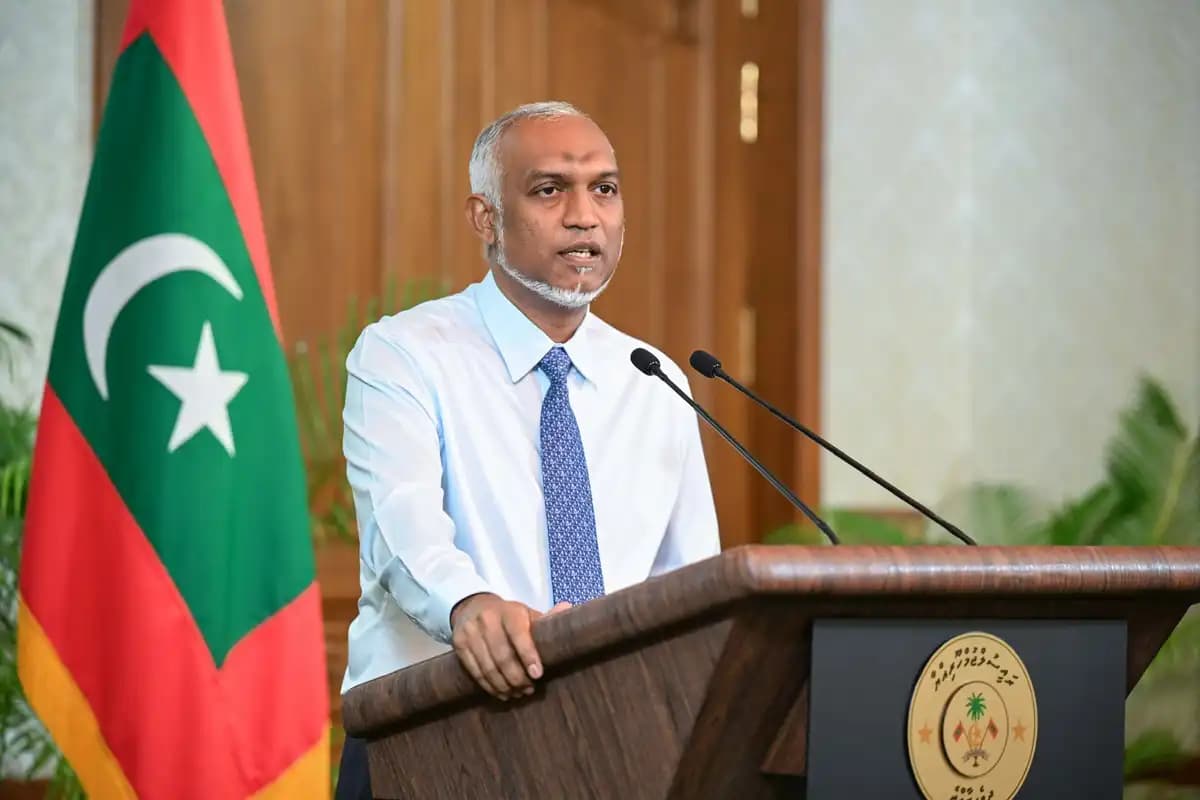
President Dr Mohamed Muizzu has called on civil society, employers, law enforcement agencies and the public to remain vigilant against human trafficking, stressing that the Maldives’ economic growth, technological progress and expanding international connectivity must never be exploited by those seeking to profit from human suffering.
In a message issued to mark the World Day Against Trafficking in Persons, the President reaffirmed the Maldives’ commitment to protecting human dignity, freedom and fundamental rights, alongside the international community.
Referring to this year’s global theme, “Trapped Behind the Scam,” President Muizzu said it highlights the changing nature of human trafficking and the increasing use of technology by criminal networks. He noted that the issue has become a major regional challenge, with vulnerable individuals being exploited and forced into criminal activities through large-scale scam operations.
The President said the Maldives, as a country that depends on international partnerships and a diverse foreign workforce, remains committed to safeguarding the rights and dignity of everyone within its borders.
He highlighted several measures introduced by his administration to strengthen the country’s response to human trafficking. Among them is “Operation Kurangi”, which significantly reduced the number of unverified work permits while substantially increasing biometric registration coverage among migrant workers.
President Muizzu also pointed to wider institutional reforms, including the introduction of the country’s first National Action Plan on Human Trafficking under the Human Trafficking Prevention Act and the submission of the first statutory annual report on the nation’s anti-trafficking efforts to Parliament.
In addition, he noted that the government has reconstituted the National Anti-Human Trafficking Coordination Committee at the policymaking level and established the Migrant Workers Resource Centre along with its Migrant Connect Portal, providing migrant workers facing abuse with a dedicated platform to seek assistance.
According to the President, these reforms are intended to reduce vulnerabilities, improve access to support for victims, strengthen the ability of institutions to identify exploitation, and ensure offenders are held accountable.
He further highlighted the Maldives Anti-Human Trafficking Strategic Plan 2026–2029, describing it as a roadmap for enhancing victim identification and protection, improving investigations and prosecutions, and strengthening cooperation with domestic stakeholders and international partners.
While acknowledging that significant challenges remain, President Muizzu stressed that combating human trafficking requires coordinated efforts across institutions, sectors and national borders.
Reaffirming that human dignity is non-negotiable, he called for renewed collective action to build a Maldives where development is accompanied by justice, institutions work together, and every individual is treated with dignity and respect.
Human trafficking remains one of the world’s most serious transnational crimes, affecting millions of people through forced labour, sexual exploitation and other forms of abuse. The World Day Against Trafficking in Persons is observed annually on July 30 to raise awareness and encourage stronger global action to combat the crime and protect victims.
How did this land?
Share this story
Discussion
Comments are turned off for now.